Commercial Security Systems in Canterbury

Canterbury is two commercial towns in one. Inside the city walls it is small independent premises on old streets — a restaurant on a lane off Burgate, a shop on Palace Street, a unit in the King’s Mile with a flat above it and a listed frontage nobody is allowed to drill into lightly. Outside the ring road it is Wincheap, Sturry Road and the business parks, where the buildings are modern, the yards are big and the delivery side is the way in.

A system that suits one is usually wrong for the other, and most of what goes wrong on a commercial job in Canterbury comes from that: a package designed for a unit on an estate, fitted to a Grade II building on a pedestrianised street.

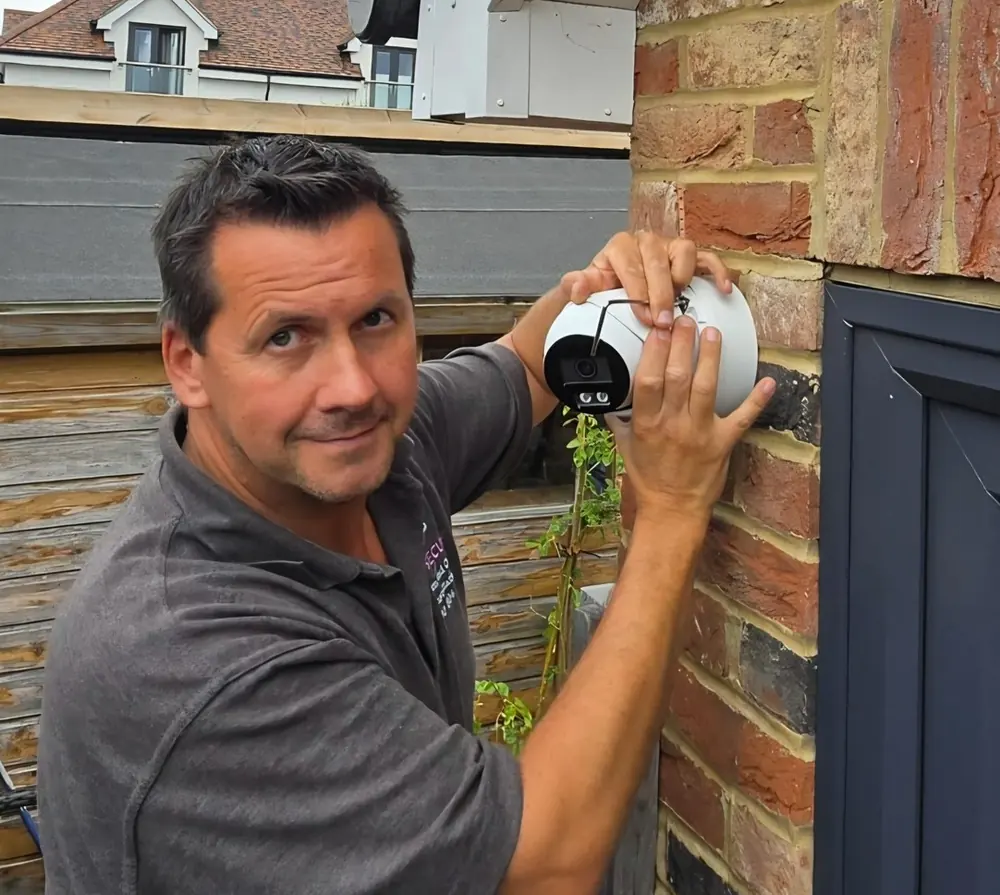
ITD Secure fits and maintains commercial intruder alarms, CCTV and panic alarms for businesses across Canterbury and the villages around it, from our base in Bearsted. Every system is designed by Kris Hill, a former police officer with more than thirty years in law enforcement and covert security, and surveyed in person before anything is quoted. We are rated 5.0 on Google.

Kris Hill of ITD Secure fitting a CCTV camera on a commercial property near Canterbury, Kent

The person who turns up

We are not a call centre with a local number. Kris Hill walks your premises, specifies the system, fits it, and comes back to service it — the same person each time, which matters more on a commercial site than a domestic one, because he already knows how your building is used.

Thirty years in law enforcement and covert security before ITD Secure. He also holds City & Guilds qualifications in Electrical Installation, so the wiring side of a commercial job stays in-house.

The short answer

We install and maintain commercial intruder alarms, CCTV and panic alarms for shops, restaurants, clinics, salons, yards and small units in and around Canterbury. Wireless Pyronix and Ajax alarms, and Hikvision and Serage cameras — ITD Secure is an approved Serage installer. Systems are graded to what your insurer has asked for, with individual user codes so openings and closings are logged against a person rather than a shared PIN.

A free survey, a realistic estimate the same day by phone or WhatsApp, and a fixed written quote once we have seen the premises. Call 07508 384864.

Six businesses we look after in and around Canterbury

Most security firms will tell you they cover Canterbury. Fewer can name the premises. These are ours, published with each business’s permission.

External CCTV camera and ITD Secure alarm sounder fitted at The Butcher of Brogdale near Canterbury, Kent
The Butcher of Brogdale — we look after several of their Kent shops, the Sturry one included.
ITD Secure alarm sounder and CCTV camera fitted at Coffee Corner in Sturry near Canterbury, Kent
Coffee Corner — Sturry, and their Westwood Cross store.
ITD Secure external alarm sounder and CCTV camera fitted at Glossed Clinic in Sturry near Canterbury, Kent
Glossed Clinic — Sturry.
ITD Secure alarm sounder and dome camera fitted at Contemporary Flowers in Sturry near Canterbury, Kent
Contemporary Flowers — Sturry.
ITD Secure external alarm sounder fitted at Peekaboo Playhouse soft play centre in Sturry near Canterbury, Kent
Peekaboo Playhouse — Sturry.

Five of those sit within a few hundred yards of each other in Sturry, which is the honest reason we are good value in this part of Kent: the drive is already paid for. A service visit to a single remote customer is expensive. Six in the same postcode is efficient, and that shows up in how quickly we can get to any one of them when something stops working.

A city-centre job: Buenos Aires

Buenos Aires is an Argentinian restaurant a few minutes’ walk from the Cathedral gates, and we look after its wired intruder alarm.

It is a useful example because it is the opposite of an easy install. A city-centre restaurant in an old building means cable runs that have to be planned rather than improvised, a kitchen and cellar that need covering without a detector sitting somewhere it will false-alarm every service, and a closing routine carried out by whoever is last out on a Saturday night rather than by an owner who knows the system. Wired, in that setting, is often the right answer rather than the old-fashioned one — nothing to re-battery in a ceiling void above a working kitchen.

The pattern repeats across the city centre. Restaurants and bars around Burgate, Palace Street and the King’s Mile close late, hold cash and stock, and sit in buildings where the fabric limits what you can do. That is a design problem, not a catalogue problem.

What changes when it is a business rather than a house

A domestic system protects an empty house at night. A commercial system has to work around people — staff arriving before the manager, deliveries at odd hours, a cleaner with a key, a supplier who needs the yard gate open.

Individual user codes. On a house one code is fine. In a business it means the log tells you nothing. Everyone should have their own, so the panel records who unset it at 06:40 and who set it at 23:15.

Part-setting that matches the trading day. The stock room and the office armed while the shop floor is open. Most business systems are capable of this and most are never programmed for it.

Coverage of the delivery side. The front is where the customers come in. The back is where the losses happen — the yard, the bin store, the fire door propped open in August.

Something for a member of staff on their own. A fixed panic button under a counter, or a pendant for whoever locks up. In a clinic, a salon or a late-opening restaurant this is often the part that matters most to the people who actually work there.

The parts of Canterbury we work in

Inside the walls. St Peter’s Street, the High Street, Burgate, Palace Street and the King’s Mile. Small frontages, listed fabric, flats above, and pedestrianised streets where a van cannot sit outside all day. Cabling has to be planned around what the building will allow, and external sounders and cameras have to go somewhere that is both useful and acceptable.

Wincheap. Retail and trade units with car parking, yards and a mix of daytime and evening trading. Bigger footprints, more external ground to cover, and a genuine need to see the approach rather than just the door.

Sturry Road and Northgate. The commercial strip on the way in and out of the city. Standalone units, forecourts and stock held on site.

Sturry, Hersden and the villages north-east of the city. Where most of our Canterbury customers actually are. Village-centre shops with residential neighbours either side, which changes what an external sounder can reasonably do at two in the morning.

We also cover Whitstable, Herne Bay, Faversham and the villages between, and we already service systems along that corridor.

Where Canterbury businesses cut back, and what it costs them

We would rather talk a business out of something than sell it. These are the three we see most.

Too few cameras for the site. Four cameras on a unit that needs seven does not give you three-quarters of a system. It gives you a recording that shows someone walking out of frame. The gap is almost always the yard, the side alley or the delivery door.

Consumer kit in a commercial setting. Cameras bought for a house, on a shop’s wifi, recording to a card, with a shared login three ex-staff still have. It works until the day you need it, which is the only day it matters.

Skipping the servicing. A commercial system earns its keep in year four, not year one. Batteries flatten, a detector drifts, a camera silently stops recording. Nobody notices until there is a reason to look. Our support contract exists so that somebody is looking on your behalf — and if you have ever tried to claim on a system that was not maintained, you will know why insurers ask.

What your insurer will ask for

Commercial policies usually specify a grade rather than a brand. Grade 2 covers most shops, salons, clinics and small offices. Grade 3 tends to appear where stock is attractive and portable, or where a previous claim has been made.

What we can tell you is what your premises needs and what grade the system we fit meets. What we cannot do is tell you what your insurer will accept — that is between you and them, and the honest move is to ask them before we design anything rather than after. Send us what they have written and we will design to it.

Systems fitted by another company can be assessed. We will tell you plainly whether yours is worth keeping, upgrading or replacing, including when the answer is that it is fine as it is.

What a commercial installation actually involves

We walk the premises first, in trading hours where we can, because a Canterbury shop empty on a Sunday tells you very little about how it works on a Saturday afternoon. We look at how somebody would approach it, where the value sits, which internal areas nobody can see, and where your staff end up on their own.

You get a realistic estimate the same day — a bracket based on what we have seen, not a figure plucked from nothing — and a fixed written quote after the survey, with no obligation. Installation is planned around your trading, and we would rather work around a closed day than leave a shop without an alarm for a week.

Commercial work more often means dealing with the building’s own electrics: panels wired in rather than plugged in, fused spurs, containment, and cable that has to be run through an occupied premises. Kris holds City & Guilds qualifications in Electrical Installation and Construction Skills (Electrical), so that side stays in-house rather than being subcontracted or worked around.

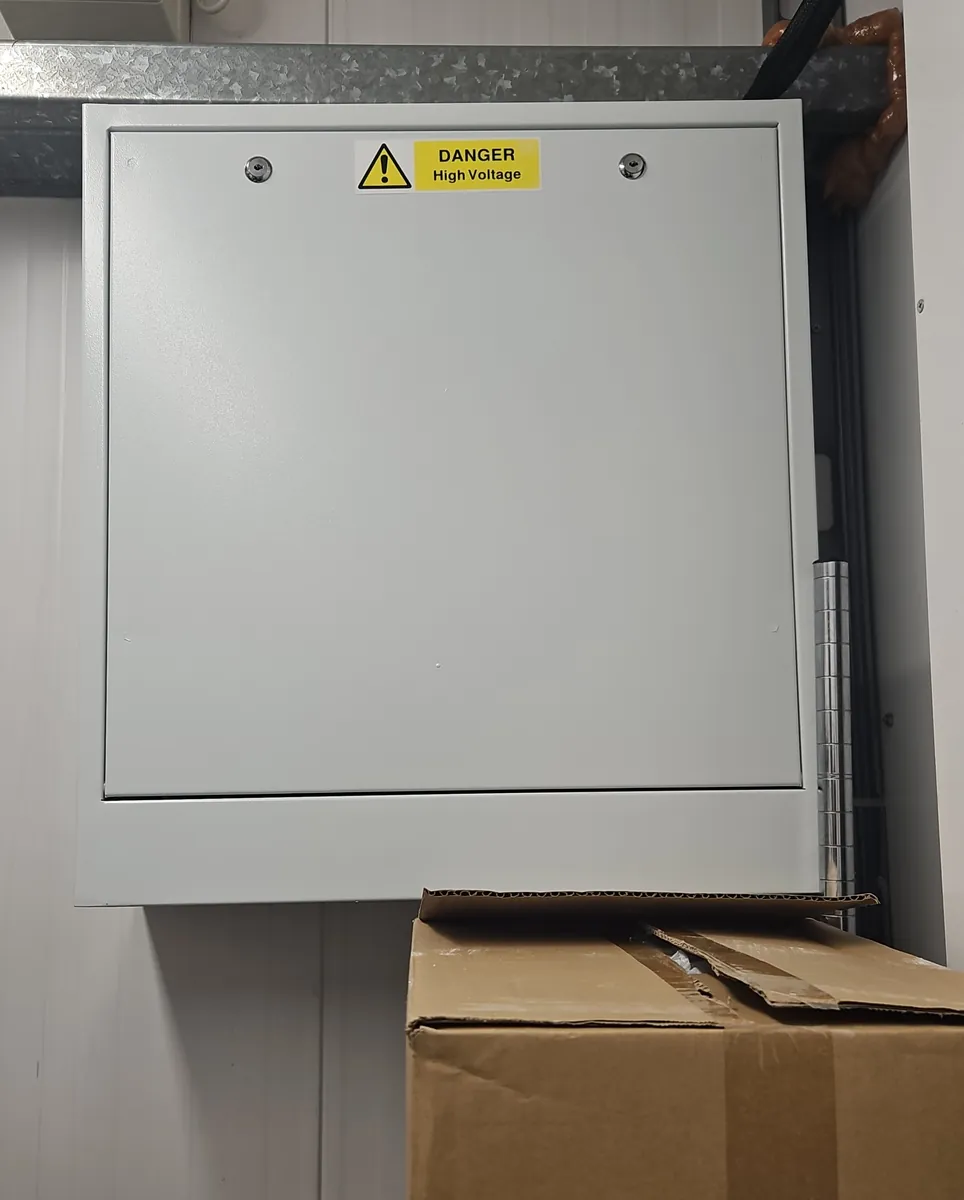
The recorder is the part a thief goes for, because taking it takes the evidence with it. On commercial jobs we house it in a lockable steel cabinet rather than leaving it on a shelf with the cabling hanging out — the footage stays put, and the install still looks like a professional job in two years’ time.
CCTV recorder housed in a lockable steel cabinet on a commercial ITD Secure installation near Canterbury, Kent
The recorder locked away, not left on a shelf for someone to carry off.

Afterwards the system is handed over properly — codes set up per person, the app on the phones that need it, and a walk round so whoever locks up actually knows how it behaves.

Commercial security questions Canterbury businesses ask

Do you cover Canterbury itself or just the surrounding villages?

Both. We look after premises inside the city walls as well as in Sturry, Hersden and along the Sturry Road and Wincheap corridors. Several of our Canterbury-area customers sit within a few hundred yards of each other, which is what makes us quick to get to when something needs looking at.

Can you work on a listed building in the city centre?

Usually, but the design changes. Cable routes have to follow what the fabric and the consent allow, sounder and camera positions need thinking about rather than assuming, and wireless often solves what a wired run cannot. We work this out on the survey rather than discovering it on the day.

My alarm was fitted by another company. Will you take it on?

We will assess it and tell you honestly whether it is worth keeping. What we can look after long term depends on the panel — we work closely with a small number of manufacturers rather than carrying parts for every brand, because that is what lets us fix things quickly when a shop is shut and losing money.

How old is too old for a commercial alarm?

There is no single age. The questions are whether parts are still available, whether it signals over more than one path, whether you can see the log, and whether your insurer would still accept it. If two of those answers are no, replacing it usually costs less over five years than nursing it.

Can staff have their own codes?

Yes, and on a commercial system they should. Individual codes mean the log shows who unset the alarm and when, rather than telling you only that somebody with the shared PIN came in. It is the single most useful thing most businesses are not using.

Can I set part of the premises while we are still trading?

Yes. Part-setting lets you arm the stock room, the office or the upstairs while the shop floor stays open. Most commercial panels can do it and most are never programmed for it, which is a shame because it is free once the system is in.

What happens when the alarm goes off at three in the morning?

That depends on how it is set up. It can sound locally, notify you and named keyholders on the app, or signal to a monitoring centre who follow an agreed escalation. We will talk you through which is proportionate for your premises rather than defaulting to the most expensive option.

Will the cameras see anything useful at night?

Only if they are specified and aimed for it. A camera pointing at a lit car park will not identify a face at the door, and vice versa. We set the positions on site looking at the live picture, because that ten minutes is what decides whether the footage is worth anything.

My CCTV has stopped recording. Can you look at it?

Yes, and it is one of the most common calls we get. It is usually a failed drive, a full drive that was never set to overwrite, or a camera that lost power months ago. Often it is fixable in a visit; sometimes it tells you the system is past its life.

Do I need CCTV as well as an alarm?

Not always. An alarm tells you something is happening; CCTV tells you what happened and who. For a shop or a restaurant with stock and cash the two together are usually worth it. For a small office with little on site, an alarm on its own may be all you need.

How quickly can you get to us if something fails?

We are based in Bearsted and cover Canterbury regularly. Because several customers sit close together in the same part of the city, we are often already in the area. Support contract customers get priority, which is much of the point of holding one.

Can you give me a price over the phone?

We can give you a realistic bracket the same day if you tell us the type of premises, roughly how many doors and windows matter and whether you want cameras. The fixed written price comes after a free survey, because that is the only point at which we can promise it.

Talk to us about your Canterbury premises

Tell us roughly what you have and what worries you and we will give you a realistic bracket the same day, by phone or WhatsApp. If you want it looked at properly, the survey is free and there is no obligation afterwards.

Call 07508 384864, or send us the basics through the contact form and we will come back to you.