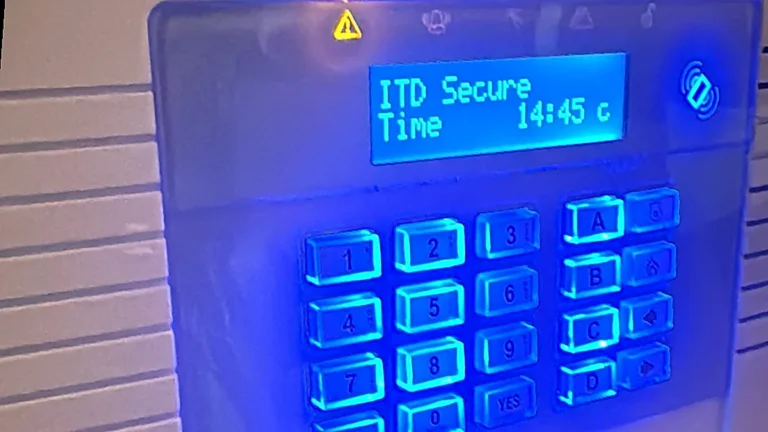
An alarm that sounds when nobody is in the building is frightening the first time and embarrassing by the third. It is also the most common reason people ring us about a system they did not buy from us. The first thing to say is that modern alarm equipment is reliable: a properly fitted and serviced system does not go off for no reason. When one does sound with nobody there, it is nearly always telling you something specific, and it is usually something a service visit would have caught first.
The short answer
If your alarm sounds with nobody in the building, or sounds when you try to set it, the likely causes are a tamper fault on a sensor or contact, a siren that has stopped communicating with the panel, mains power or wifi dropping out, a sensor battery at the end of its life, or a system that is overdue a service. None of these is a false alarm in the old sense. Each is the panel reporting a real fault. Follow your instructions to disarm and silence it, do not open the panel, and get the fault looked at.
Why modern systems rarely false-alarm
Twenty years ago a spider on a lens or a radiator under a detector could set a system off, and a lot of what people believe about “false alarms” comes from that era. Current wireless systems from Pyronix and Ajax are a different generation: detectors that tell the difference between a pet and a person, sensors that report their own battery state and signal strength, and panels that log every event so the cause is on the screen when we arrive. On the systems we fit and look after, an alarm sounding unexpectedly is unusual enough that we treat it as a fault report, not a nuisance.
What is usually behind it
A tamper fault
Every sensor and contact has a tamper switch so that it cannot be opened or knocked off the wall without the panel knowing. If a tamper is triggered, many panels will refuse to arm, or will sound when you try. A recent commercial customer of ours had exactly this: a member of the public had slammed the shop door hard enough to damage the tamper inside the door contact, and from then on the panel sounded every time staff tried to set the alarm at closing time. A new contact fixed it in one visit. Most tamper calls are that kind of thing — a knock, a loose fixing, a redecorated wall — rather than anything sinister.
The siren losing contact
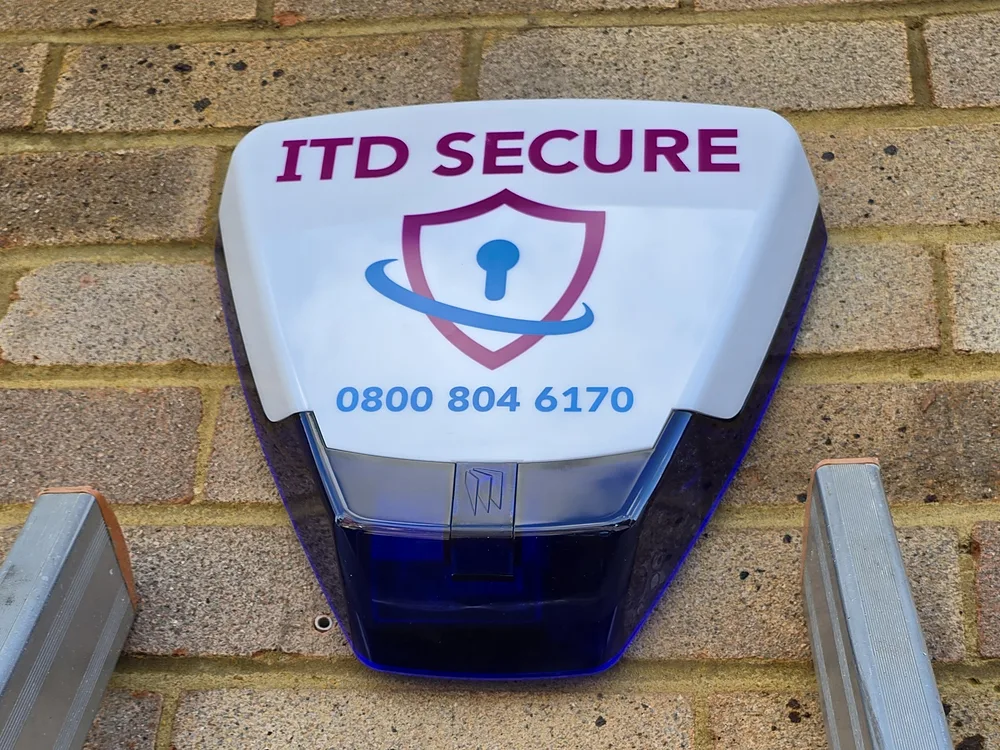
A wireless external sounder talks to the panel constantly. If it stops communicating — a flat battery in the sounder, a fault, or interference — the panel treats the loss of contact as a fault and alerts you. That is the system working, not failing, but it needs attention promptly because a sounder that has dropped off the system is not going to sound when you actually need it.
Mains power or wifi dropping out
Panels run on mains with a backup battery and report when the mains goes. Systems that notify your phone over the broadband will also flag a lost connection. A power cut at night, a tripped circuit, or a router change can each produce an alert. If the router has been replaced, the system usually needs reconnecting rather than repairing.
Batteries
Wireless detectors run on batteries that last several years, and the system warns you as they fade. Left long enough, a low battery becomes a fault report, and on some panels a fault at night is treated as an alarm condition. This is the single most common thing an annual service prevents.
A system overdue a service
Most of the above show up as warnings on the panel long before they become a siren at night. If nobody is looking at the panel, or the warnings have been ignored, the first you hear of it is the sounder. Annual servicing exists to catch these while they are still a five-minute fix.
How long will it go off for?
An external sounder is required to cut out within 20 minutes, and most modern panels stop the bell box after 15. The internal sounder can continue until the system is silenced at the keypad or app. If your bell box rings for longer than 20 minutes, the cut-out itself has failed, and that is a fault to report.
What to do at three in the morning
Follow your instructions to disarm the system and silence the siren and panel — keypad code, key fob or app, whichever your system uses. Then leave it until daylight and ring your installer. Do not be tempted to open the alarm panel. There is 230 volts inside, and it is very easy to touch when you are tired, anxious and working in the dark. Nothing inside the panel needs doing at three in the morning that cannot wait until someone qualified is standing in front of it.
When the honest answer is an upgrade
An old alarm can still function, and we will always tell you if servicing is the right call. But an older panel lacks the things that make a modern system genuinely more useful: arming and disarming from anywhere in the world, a notification on your phone the moment something happens, current anti-jamming technology, and the ability to bring doorbells, smoke and carbon-monoxide alarms, flood sensors and medical or panic alarms onto the same system. If your panel cannot tell you it has gone off, the siren at three in the morning is the only notification you will ever get — and if you are away, you will not get that either. That is usually the point at which an upgrade stops being a luxury. There is more on what that involves on our alarm upgrades page.
One thing we see that others miss
Thirty years in policing and covert security came before this business, and it changes what we look for on a fault or survey visit. One example: engineers routinely fit standard door contacts to French doors and bi-fold doors. In our experience, a burglar who has got to the back of a property very rarely opens the patio doors. They put something through the glass and climb in through the hole — and a door contact never sees it. On those doors we specify additional motion detection covering the room instead. It is a small decision that makes the difference between a system that sounds and one that does not.
Will you look at a system somebody else fitted?
Yes. Most of the fault calls we take are for systems fitted by other companies, some of which no longer trade. We will assess any make of alarm. We take on long-term maintenance for the manufacturers we know well enough to look after properly, and if yours is not one of them we will tell you honestly what your options are, including what a replacement would involve.
Frequently asked questions
Why does my alarm go off when nobody is home?
On a modern, properly serviced system it is rarely a false alarm. The usual causes are a tamper fault on a sensor or door contact, an external sounder that has lost contact with the panel, mains power or wifi dropping out, a detector battery at the end of its life, or a system that is overdue a service. Each is the panel reporting a real fault.
How long will a burglar alarm ring for?
An external sounder is required to cut out within 20 minutes, and most modern panels stop the bell box after 15. The internal sounder continues until the system is silenced at the keypad or app. If the bell box rings for longer than 20 minutes, the cut-out itself has failed and needs looking at.
What should I do if my alarm will not silence?
Follow your system’s instructions to disarm and silence it using the keypad code, key fob or app. Then leave it until daylight and ring your installer. Do not open the alarm panel: there is 230 volts inside and nothing in there needs doing at night.
Will you look at an alarm you did not fit?
Yes. Most of the fault calls we take are for systems fitted by other companies. We will assess any make of alarm, take on long-term maintenance for the manufacturers we know well, and tell you honestly what your options are if yours is not one of them.
Get it looked at
If your alarm is sounding when it should not, or will not set, ring us on 07508 384864 or send a message. Tell us the make of the panel and what the keypad or app is showing, and we can usually say straight away whether it is a battery, a tamper or something that needs a visit. Servicing and repairs across Maidstone and Kent: alarm servicing and maintenance. Thinking about replacing an older system: alarm upgrades.
New system for a house in the town or the villages around it: burglar alarm installation in Maidstone.